How I Turned 70 Sales Conversations Into 300 Content Concepts Using a GPT Agent
Turn sales calls into a scalable content engine. Learn how reviewing 70+ calls led to 300+ ideas, 250 pieces of content, and 20 newsletters without brainstorming.
Every sales conversation is packed with signals.
Pain points. Objections. Real-world context. But most of it gets buried in meeting notes and CRM records places your marketing team rarely touches.
The irony? Your best content ideas are already there, in the exact words your buyers use to describe their problems. There’s just no system to turn those conversations into content. So the insights sit in folders no one opens.
I reviewed 70+ sales calls and pulled out 300+ content ideas. That work turned into 250+ pieces of content and 20 newsletters. None of it started with a blank page. Or a brainstorming session.
It started with a Custom GPT trained to extract signal from call transcripts and turn it into usable, structured ideas.
What the GPT is actually doing
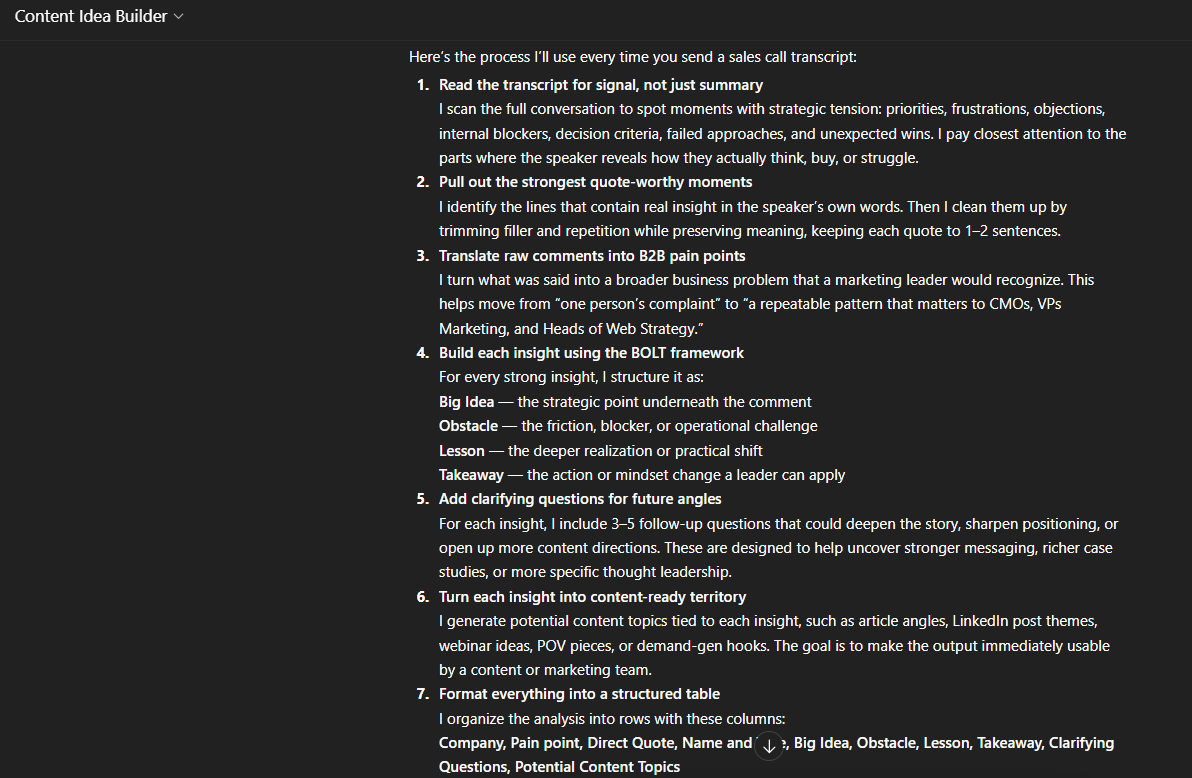
Before the steps, one thing worth clarifying. This isn't a summarisation tool. It's a signal extraction tool. Most AI applied to call transcripts produces summaries a compressed version of what was said. That's useful for sales ops. It's not useful for content.
What you actually want are the moments inside a conversation where a buyer reveals something true.
- A problem they can't articulate cleanly.
- A workaround that signals a broken process.
- A frustration that's been sitting there for months.
The GPT is trained to find those moments. Everything else follows from there. Here's the exact process.
Step 1: Scan for signal, not just topics
The GPT reads the transcript looking for specific types of moments, not general themes.
It flags when someone describes a problem they haven't been able to solve. When they explain why something isn't working. When they name internal friction budget, alignment, competing priorities. When they share a real operational challenge, not just a category of challenge.
This is the step most people skip when they try to do this manually. They skim for topics. The GPT looks for context.
Step 2: Pull the high-value quotes
From those flagged moments, it extracts short, high-signal quotes one to two sentences.
It cleans them lightly. Removes filler, smooths the grammar without changing the meaning. The goal is to preserve the buyer's actual language, because that language is the content asset. Paraphrasing it kills what made it useful.
Step 3: Translate the quote into a pain point
A direct quote is specific to one person's situation. A content piece needs to speak to a broader pattern.
This step does that translation. It takes the quote and identifies the underlying challenge it represents something relevant to the wider ICP, not just the individual on the call.
This is where the insight moves from "interesting moment" to "content opportunity."
Step 4: Structure it using the BOLT framework
Every insight gets organised into four components:
- Big Idea — the main strategic concept the insight points to.
- Obstacle — the real-world challenge sitting behind it.
- Lesson — the reframe, the thing that shifts how you see the problem.
- Takeaway — clear, practical advice the reader can act on.
This structure does two things. It stops insights from staying vague, and it gives you a working content skeleton before you've written a word. Most content marketers start drafting and find the structure later. BOLT inverts that.
Step 5: Generate content angles
From each structured insight, the GPT suggests where the idea could go.
- LinkedIn post.
- Blog article.
- Webinar topic.
- Podcast episode.
Not all of them will fit — the point is to see which formats the insight naturally suits before you decide where to invest.
A single insight from one sales call can often support three or four distinct pieces of content.
Step 6: Add clarifying questions
This step extends the value of each insight beyond the current call.
The GPT generates three to five follow-up questions designed to go deeper:
- What triggered this problem?
- How widespread is it across the organisation?
- What solutions have already been tried?
These questions do two things. They give your sales team better follow-up prompts. And they surface future content angles that aren't visible yet.
Step 7: Output to a structured table
Everything — company, contact, quote, pain point, Big Idea, Obstacle, Lesson, Takeaway, clarifying questions, content angles — gets delivered in a single structured table row.
One insight per row. Scannable. Comparable. Easy to prioritise.
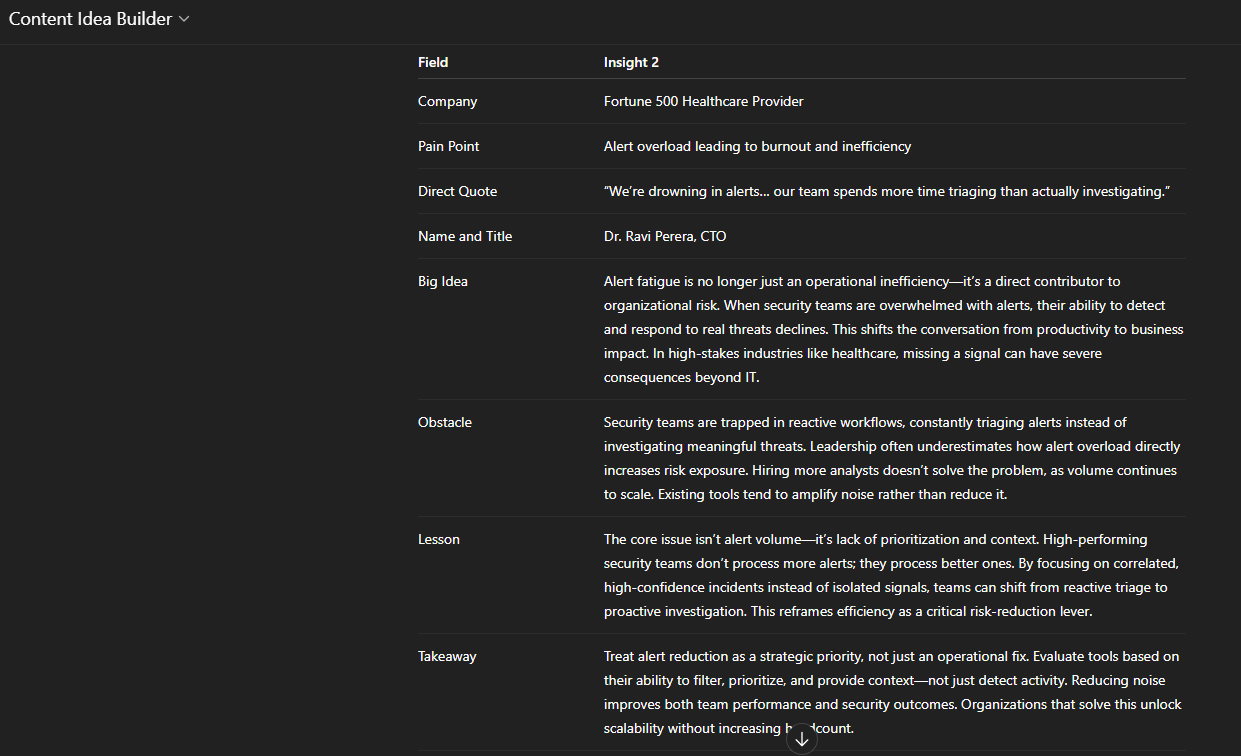
When you're looking at twenty insights side by side, you can quickly see which pain points are recurring, which angles you've already covered, and where the gaps are.
Step 8: Push to Airtable
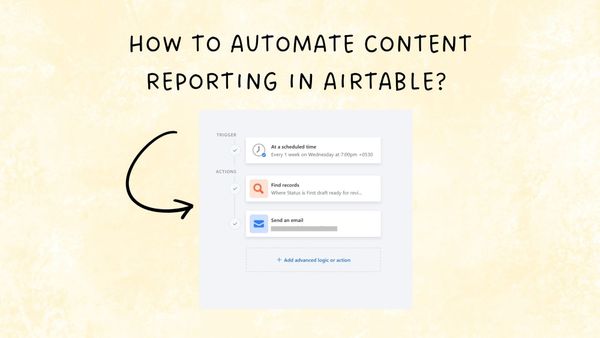
The table feeds directly into an Airtable content database.
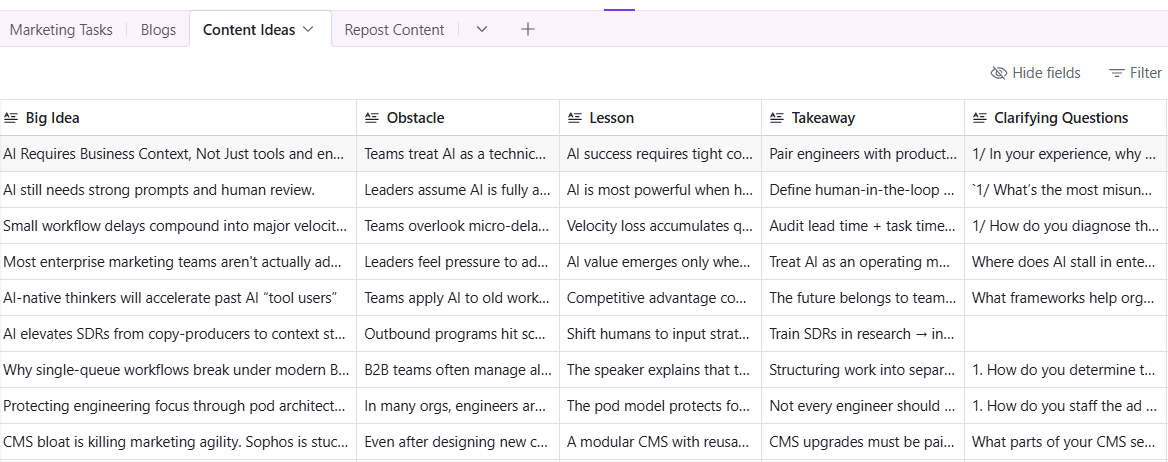
Each insight becomes a record. From there it can be filtered by pain point, tagged by content type, prioritised by strategic fit, and assigned for production.
The result is a content pipeline built entirely from what your buyers actually said not what you assumed they cared about.
After 70+ calls and 300+ ideas, the most consistent finding isn't about the tool. It's that the insight was always there. Sitting in a recording nobody went back to.